Imo 2027: BBO 2027 Reaffirms Commitment To Bringing Back Ogbujingidi, Says He Alone Can Guarantee Continuity Of Government Legacy

By Obi Arthur Opara
The Bring Back Ohakim (BBO 2027) movement has reaffirmed its commitment to the return of His Excellency, Dr Ikedi Ohakim (Ogbujingidi), as the next governor of Imo State, describing him as the only leader capable of sustaining and consolidating the remarkable developmental trajectory of the present administration.

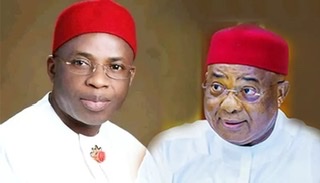
In a statement released in Abuja on Monday, 6 October 2025, to mark the six-month anniversary of the foremost political advocacy group, the Director General of BBO 2027, Capt. Bishop C. Johnson (U.S. Army, rtd), said that the group’s conviction is grounded on the proven governance credentials of Dr Ohakim and the clear historical parallels between his administration (2007–2011) and that of Governor Hope Uzodimma (2020–present).
According to Capt. Johnson, “only a trusted and tested hand like Dr Ikedi Ohakim — one with an established record of infrastructure renewal, fiscal prudence, and institutional reform — can sustain Imo’s current momentum. His return will not be an act of personal ambition, but a patriotic call to duty to protect the state’s gains and ensure policy continuity.”
He cautioned Imolites to be wary of untested aspirants with no record of leadership either in governance or credible private enterprise, warning that “this is not the time for slogans, populism, or experimentation. Imo’s destiny must not be left in the hands of political apprentices.”
Observers of Imo politics have noted striking similarities between Uzodimma’s Shared Prosperity Agenda and Ohakim’s New Face of Imo Agenda. Both leaders share a philosophy anchored on structured governance, fiscal responsibility, and infrastructural modernisation.
Under Governor Hope Uzodimma, Imo State has witnessed a remarkable turnaround. From crippling insecurity and fiscal distress, the state now stands on renewed footing. Official figures show that public debt has dropped from ₦259 billion to ₦99 billion, while internally generated revenue has soared from about ₦400 million to nearly ₦4 billion monthly. This financial discipline has powered a state-wide infrastructure renaissance, with more than twenty major road projects linking Owerri, Orlu, Okigwe, and the coastal axis.
The recognition of Uzodimma as Digital Governor of the Year and Infrastructure Governor of the Year in 2025 merely affirmed what Imolites already knew: that discipline, consistency, and focus yield results. President Bola Ahmed Tinubu’s recent visit to commission the Assumpta Twin Flyover, Owerri–Mbaise–Umuahia Federal Road, and the Emmanuel Iwuanyanwu International Conference Centre further validated the progress.
But behind these successes lies a deeper truth — the foundation was laid by another reformist governor, Ikedi Ohakim, whose ideas and institutions continue to influence the state’s policy architecture today.
Between 2007 and 2011, Ohakim implemented a visionary framework that fused governance reforms with citizen participation and environmental renewal. His creation of the Imo Road Maintenance Agency (IROMA) became one of Nigeria’s most effective subnational public works schemes, employing over 30,000 youths and ensuring rural–urban road maintenance long before similar models appeared nationwide. Uzodimma’s current Roads and Bridges Agency is a natural continuation of that institutional vision.
In 2008, Ohakim launched the 10,000 Graduate Employment Initiative, absorbing thousands of young professionals into the civil service, education, and health sectors — a structured, merit-driven intervention far ahead of its time. The model directly mirrors today’s youth-focused reforms under Uzodimma’s Digital Skill and Productivity programmes.
Financial innovation was another hallmark. Ohakim’s administration introduced a ₦40 billion infrastructural bond, accessing ₦18.5 billion in the first phase, which funded roads, the Oguta Wonder Lake Resort, rural water schemes, and electrification. It was one of Nigeria’s earliest state-level development bonds — a move that placed Imo among fiscally disciplined states. Uzodimma’s current debt reduction and project financing strategies resonate with that same prudence.
Environmentally, Ohakim’s Clean and Green Initiative, executed through ENTRACO, made Owerri Nigeria’s cleanest capital city for three consecutive years. That legacy of environmental renewal remains the template upon which Uzodimma’s current urban renewal and waste management programs are built.
Ohakim also established enduring educational and social infrastructure — including the College of Education at Ihitte/Uboma, the Greater Okigwe Water Scheme, and expansions at the Imo State Polytechnic — aligning perfectly with Uzodimma’s present drive for human capital development.
Beyond development, political justice and zoning fairness remain central to Imo’s stability. While Orlu Zone — Uzodimma’s base — has governed the state for more than two decades since 1999, Okigwe Zone (Ohakim’s home) has had only a single four-year term. BBO 2027 argues that allowing Ohakim to complete Okigwe’s remaining four years would restore equity and prepare a smooth transition to Owerri Zone thereafter, in line with the Imo Charter of Equity.
“Ohakim’s return will not only guarantee continuity of development but also heal old political wounds,” Capt. Johnson stated. “He remains the only figure who combines tested administrative competence with political fairness and historical balance.”
Imo State stands at a decisive crossroads. Governor Uzodimma has redefined the governance template and restored fiscal order. Yet, sustaining these gains demands a successor who understands both the past and the path forward. That successor, many believe, is Dr Ikedi Ohakim — the reformer, the builder, the bridge.
With his blend of experience and humility, he represents continuity with correction, ensuring that Imo’s progress neither stalls nor regresses. His track record in institutional development, youth empowerment, environmental renewal, and fiscal innovation speaks to a future of stability, inclusiveness, and sustainable growth.
In the words of Capt. Johnson, “The question before Imolites is not who is popular, but who is prepared. Continuity is the soul of progress, and Ohakim is the custodian of that continuity.”
Capt Johnson concluded that
Imo’s transformation story is an ongoing one and that why Hope Uzodimma has charted a credible course; Ikedi Ohakim stands ready to deepen it. The two men mirror each other in purpose and discipline — one laying the foundation, the other expanding the structure.
As the 2027 governorship race approaches, the choice before the people is clear: to preserve Imo’s rising trajectory through tested leadership or risk reversing hard-earned gains.
With Ogbujingidi, the promise of Imo’s tomorrow remains secured — continuity with correction, experience with humility, and progress with prudence.