IMO 2027: THE BATTLE LINES ARE EMERGING AS THE RACE FOR DOUGLAS HOUSE BEGINS TO TAKE SHAPE

By Stanley Nwachukwu PhD,
Political Consultant and Analyst


With less than two years to the 2027 Imo State governorship election, the political atmosphere is gradually clearing, and the contours of what promises to be one of the most fiercely contested elections in the state’s history are beginning to emerge.
For months, political observers have speculated about the likely contenders, the platforms they may eventually fly, and the alliances that could define the contest. While official party primaries remain ahead, recent political movements, consultations, defections, coalition talks, and grassroots mobilization efforts suggest that the field is beginning to take shape.
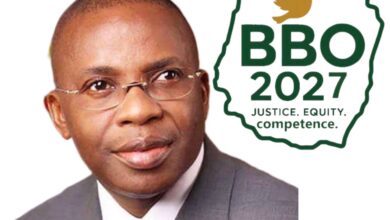
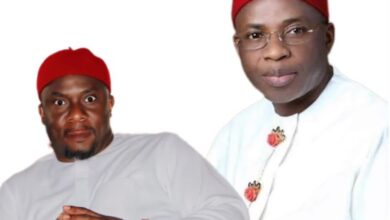
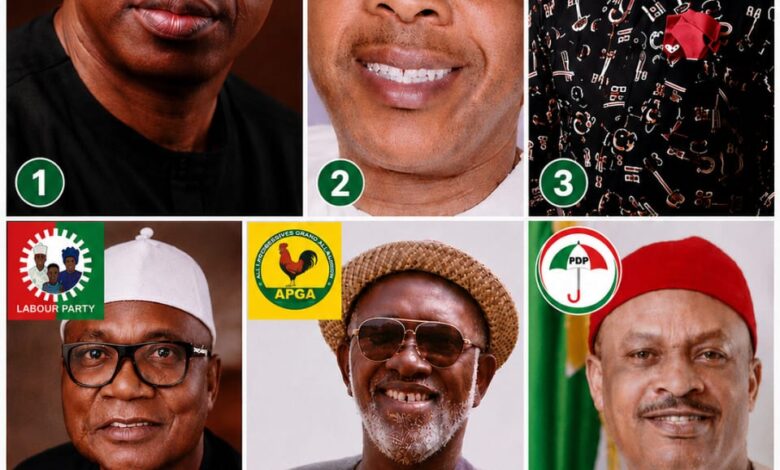
A political illustration currently circulating across social media platforms captures what many analysts believe may become the dominant lineup of contenders for the governorship race. The image reflects an evolving political reality in which some of Imo State’s most recognizable political figures are gradually becoming associated with different political platforms ahead of the decisive battle for Douglas House.
At the center of the emerging conversation is former Governor Dr. Ikedi Ohakim, whose political resurgence continues to gather momentum across the state. After years outside the Government House, many stakeholders believe the former governor is strategically positioned to secure the APC governorship ticket should he decide to formally enter the race. His growing acceptance among party stakeholders, coupled with renewed grassroots support across the three senatorial zones, has made him one of the most talked-about figures in the unfolding political equation.
Equally commanding attention is former Governor Emeka Ihedioha, who is widely viewed as a leading force within the ADC coalition framework. Following his departure from the PDP and his continued engagement with opposition forces, many political watchers see him as a formidable contender whose organizational structure and political experience could make him a major factor in 2027.
In another corner of the emerging political landscape is Senator Ezenwa Onyewuchi, whose name is increasingly being linked with the National Democratic Coalition (NDC). The senator’s political growth, electoral consistency, and expanding support base have elevated him into discussions among serious governorship prospects.
Also attracting considerable attention is businessman, Charles Orie, whose political trajectory continues to rise since he resigned from his position as the managing director of ISOPADEC and jumped into the race . Political insiders speculate that he may eventually emerge as a leading figure within Labour Party should the party decide to make a strong push for the governorship. His experience and growing influence in state politics have strengthened his profile considerably.
Former Senator Athan Achonu remains another important player whose political relevance cannot be ignored. Having demonstrated significant electoral strength in previous contests, Achonu continues to command a loyal support base and remains one of the figures capable of altering the dynamics of the race, particularly if he secures APGA ticket and broad coalition support. So far, since joining the party he seems poised to grab the party’s ticket.
Completing the picture is Senator Samuel Anyanwu, whose influence within the PDP remains substantial despite the party’s internal challenges. As one of the state’s most recognizable political figures, Anyanwu remains a potential standard-bearer capable of mounting a competitive challenge should he emerge as the party’s candidate.
Beyond personalities and party platforms, however, the 2027 governorship election is increasingly shaping into a referendum on equity, zoning, competence, performance, and the future direction of Imo State. Questions surrounding regional balance, economic development, security, infrastructure, youth inclusion, and governance effectiveness are expected to dominate public discourse as the election draws nearer.
Perhaps the most intriguing aspect of the unfolding scenario is that for the first time in many years, the governorship contest appears likely to feature multiple heavyweight contenders with substantial political structures, extensive name recognition, and proven electoral experience. Such a development would transform the election from a conventional partisan contest into a genuine marketplace of ideas, records, and competing visions for the future of Imo State.
While much can still change before party primaries and final nominations, one thing is becoming increasingly clear: the race for Douglas House has quietly begun.
The pieces are moving.
The alliances are forming.
The calculations are underway.
And as 2027 approaches, Imo State is gradually witnessing the emergence of what may become one of the most consequential governorship contests in its democratic history.