
Rejoinder to Ralph Ejimkonye’s Article:“Is Orlu Zone Uncomfortable With Owerri Producing The Next Imo Governor in 2027?”

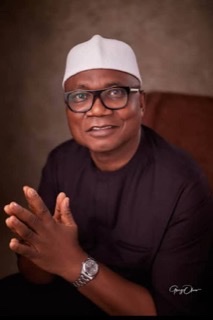
By Ebere Ukachukwu
Ralph Ejimkonye’s recent article, though eloquently written, presents a lopsided narrative that reduces the complexities of Imo politics to an oversimplified “us versus them” argument. While he champions the cause of Owerri zone’s quest for the governorship in 2027, his piece fails to capture the nuances of political reality in our state.
First, let us be clear: no zone in Imo State holds a divine right to the governorship. The constitution of Nigeria does not enshrine zoning as a law, but rather as a political understanding, a moral compass, and in some cases, a gentleman’s agreement among stakeholders. To present Owerri zone’s aspiration as “unassailable” is to disregard the principle that in democracy, power is negotiated, not dictated.
Ejimkonye argues that Orlu has “monopolized” power for over two decades. This is factually correct in terms of years, but misleading in context. Orlu’s successive dominance has been the product of political strategy, unity, and the will of the electorate across the three zones, including votes from Owerri. Power in a democracy is not seized by sentiment; it is won by building consensus, mobilizing the grassroots, and convincing the majority of voters. If Orlu has been successful at this, it should not be vilified but studied.
Moreover, the portrayal of Orlu leaders as issuing “veiled threats” against Owerri is an exaggeration that serves only to stoke division. Politics is a contest of interests. Advising caution is not a threat; it is prudence. It is a reminder that no zone, no matter how aggrieved, can assume the governorship as a birthright without engaging the wider Imo political family.
Ejimkonye also glosses over an inconvenient truth: Owerri zone has not always spoken with one voice. Internal divisions and lack of sustained political organization have historically undermined its chances. It is unfair to heap the blame solely on Orlu when Owerri itself must do the hard work of unity, grassroots mobilization, and alliance-building. Emotional appeals to “equity” will not substitute for political preparation.
Let us also not forget that the brief tenure of Rt. Hon. Emeka Ihedioha in 2019 was not sabotaged by Orlu people, but cut short by a judicial verdict. Owerri had its chance, however short, and must not weaponize that unfortunate event as a perpetual grievance.
The call for equity is noble, and indeed, many in Orlu sympathize with the argument that Owerri deserves its turn. But equity cannot be divorced from capacity. The critical question is: who among the aspirants can unify Imo, deliver governance, and win the confidence of the electorate? The answer cannot be found in sectional agitation alone.
Ejimkonye concludes by suggesting that Orlu must “say enough” and step aside voluntarily. While magnanimity is admirable, politics does not operate on voluntarism. Every zone, including Orlu, has the right to present its best candidates. The people of Imo, not newspaper columnists, will decide at the ballot box.
The future of Imo State cannot be built on guilt-tripping one zone while glorifying another. What we need is not rhetoric that pits Orlu against Owerri, but a constructive dialogue that prioritizes competence, inclusiveness, and vision. If Owerri produces a strong candidate who can inspire the entire state, then victory in 2027 is within reach. But to demand it as a matter of entitlement is to misunderstand the very essence of democracy.
In conclusion, the path to 2027 must be paved not with accusations and counter-accusations, but with bridge-building. Orlu does not fear Owerri’s ambition; it only insists that ambition must be matched with strategy, unity, and popular mandate. That is how democracy works, and that is how governors are made.
Ebere Ukachukwu, Writes From Ohaji/Egbema LGA


