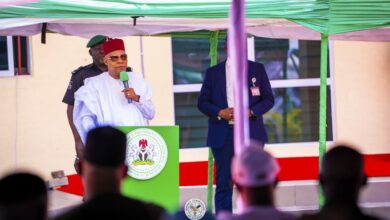
TINUBU’S ₦17BN GRASSROOTS FUND AND THE STRATEGIC MANDATE OF CHIEF IFEANYI ORUH IN TRANSFORMING IMO’S RURAL LANDSCAPE

By Julian Chijioke, PhD

The recent announcement of the ₦17 billion Community-Based National Social Action Fund by President Bola Tinubu represents a significant shift in the federal government’s approach to sub-national development. By placing the political ward at the center of socioeconomic transformation, this initiative signals a move toward more inclusive, grassroots-driven governance.
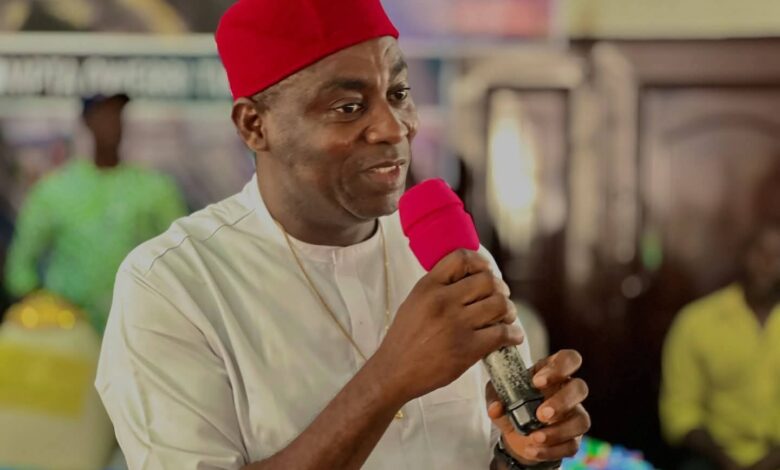
For a state like Imo—long aligned with the mandate of Reconstruction, Rehabilitation, and Recovery—this intervention is not merely a financial boost but a strategic catalyst for deepening the impact of local governance. At the forefront of this transition in the Eastern Heartland is Chief Ifeanyi Damian Oruh, Commissioner for Rural Development and Empowerment. His role has now become more critical than ever.
The success of this fund within Imo State will depend largely on his ability to harmonize federal resources with state-level priorities, ensuring that the benefits reach citizens in even the most remote communities. Chief Oruh’s mandate is clear: to serve as the technical and administrative conduit that translates high-level policy into tangible rural prosperity. In doing so, he reinforces the governance philosophy of Governor Hope Uzodimma—one that prioritizes the welfare of the people above all else.
To achieve this, Chief Oruh must draw on his reputation as a bridge-builder and development strategist with a deep understanding of the sociological dynamics of rural Imo. The fund’s community-based structure renders traditional top-down approaches inadequate. Instead, it demands a transparent, participatory framework that identifies and addresses the most pressing needs at the ward level—from agricultural support and rural electrification to clean water and primary healthcare infrastructure.
By localizing decision-making, this model democratizes development, giving communities a direct voice in how resources are deployed. This not only ensures relevance but also fosters a sense of ownership among beneficiaries—an essential ingredient for long-term sustainability. When rural populations see their specific needs addressed through what was once a distant federal initiative, trust in government is naturally strengthened.
A critical contribution Chief Oruh can make is the institutionalization of integrity and accountability in fund management. In a political climate where grassroots communities often feel disconnected from power, transparent execution of projects becomes the most powerful form of communication. His inclination toward precision and strategic planning will be vital in minimizing bureaucratic leakages that have historically undermined similar interventions.
By ensuring that every allocation corresponds to a verifiable project on the ground, he not only delivers value but also strengthens the credibility of the state government. When farmers gain access to modern tools or local markets are revitalized, the benefits reinforce the image of a responsive leadership—one that delivers on its promises.
Beyond infrastructure, Chief Oruh’s mandate must also encompass human capital development. Rural transformation is not solely about physical projects; it is fundamentally about improving socioeconomic outcomes. By channeling resources into skills development and microenterprise support—particularly for women and youth—the Ministry can stimulate a wave of grassroots entrepreneurship.
This approach creates a self-sustaining ecosystem of growth, where increased productivity and income levels become the true indicators of progress.
Aligning federal funding with existing state empowerment initiatives will generate a multiplier effect, making the administration’s impact both widespread and deeply personal.Equally important is strategic communication. In today’s governance landscape, implementation alone is not enough; perception matters.
By maintaining open channels with community leaders, traditional institutions, and youth groups, Chief Oruh can ensure that the narrative of progress is co-owned by the people.Town hall engagements and on-site project inspections will help bridge the gap between government and citizens, transforming abstract policy into visible, shared achievement. Such visibility not only humanizes governance but also strengthens public confidence in leadership.
Chief Oruh’s demonstrated loyalty to the administration’s vision must now translate into equitable development across all wards. This is not about patronage but about upholding the integrity of the state’s development agenda. By prioritizing need-based project selection, he can unify the state under a shared sense of progress while addressing longstanding disparities.
As implementation unfolds, a robust monitoring and evaluation framework will be essential. Sustaining early momentum requires continuous oversight and adaptive management. A successful rollout in Imo could position the state as a national benchmark for effective utilization of federal social action funds.
Ultimately, the goal is to build a resilient rural economy capable of withstanding broader national challenges. When this ₦17 billion investment translates into improved infrastructure, empowered citizens, and thriving local enterprises, the cumulative impact will be a more stable and prosperous Imo State.
Chief Ifeanyi Damian Oruh’s stewardship of this initiative will be defined by his ability to combine technical expertise with a human-centered approach. By bridging federal ambition, state strategy, and local aspiration, he has the opportunity to anchor a lasting legacy of grassroots transformation.
If executed with transparency, strategic focus, and inclusive engagement, this fund could mark a turning point in the history of rural development in Imo State—leaving its communities stronger, more self-reliant, and more confident in the leadership shaping their future.
Ln. Julian Chijioke, PhD, writes from the Eastern Heartland.