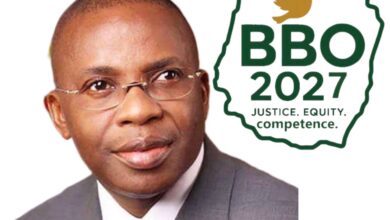
From the 2007 Blueprint to a Timeless Vision – How a Bold Governance Model Continues to Shape Imo’s Future

PART 2 – A TIMELESS VISION
By Capt. Bishop C. Johnson
Vision is like a lighthouse that beams the pathway—a torch that illuminates the road ahead, empowering the committed and the determined to see the big picture blurred by darkness and to resolve to “do more.”
When vision is absent, even the oasis of greatness remains blighted. Without zeal, passion, and the fire to move from “what is” to “what ought to be,” societies become trapped in their circumstances. Between where we are and where we ought to be lies a maze of expectations—expectations that define the lines of change.
True change can only happen when those expectations are identified and a process to meet them is clearly articulated. That process is the operational realm of vision. And because no one can give what they do not have, the quality of governance is ultimately tied to the depth of the leader’s vision and conviction. A leader without vision will inevitably steer government toward failure, unable to confront the challenges inherent in transformation.
This is why many so-called leadership crises are, at their core, crises of vision.
The Vision That Dared to Be Different
The Ohakim administration stood apart because it was anchored on a clear, transformative vision—a vision so bold it demanded a radical approach, which Dr. Ohakim aptly called “business unusual.”
From the outset, he recognized the imperfections of the old ways of running government—ways that had stunted real development. Even after his manifesto was hailed as a roadmap for a paradigm shift, he convened a bipartisan transition committee of the best minds in the state to scrutinize, refine, and strengthen the plan. This act reflected team spirit, modesty, and inclusivity—hallmarks of his leadership style.
The New Face of Imo Agenda emerged as a collective vision to transform Imo into a modern, model state with a diversified manufacturing-based economy anchored on science, technology, and skills development—offering guaranteed employment opportunities.
But change, like the proverbial omelet, comes at a cost. It demands sacrifice, pulls people out of their comfort zones, and often meets resistance from those invested in the status quo. In Imo’s case, the resistance was especially strong because the state had long operated as a closed, civil-service-based economy where over 95% of resources serviced the bureaucracy, leaving the private sector marginalized.
Ohakim sought to dismantle this imbalance, opening the economy to private sector participation and creating conditions for sustainable growth. This meant not just policy shifts but also building the superstructure—infrastructure, urban renewal, and environmental reforms—needed to attract investors and stimulate entrepreneurship.
Practical Governance, Not Cosmetic Projects
The administration avoided shallow populist gestures. Projects were chosen for their capacity to produce real, recreative value, aligning with short-term goals while laying the groundwork for long-term prosperity.
Every policy and project was part of a coherent whole:
Stakeholder Governance brought communities directly into decision-making, ensuring inclusivity and transparency.
Security reforms reduced crime and maintained political stability, creating a safe environment for business and social life.
Strategic infrastructure improved connectivity, supported trade, and expanded economic activity beyond government employment.
Human capital investment, particularly through the 10,000 Graduate Job Scheme, turned educated youth into active contributors to the economy.
Communicating and Defending the Vision
Great leaders often face moments when they must move ahead of the people, confident they are leading in the right direction. As Nelson Mandela observed, during such moments the leader must create opportunities to explain the unknown.
The Ohakim administration’s stakeholder system embodied this principle. It was a deliberate policy to improve communication, build consensus, and keep citizens regularly informed about what the government was doing and why. Transparency was not an afterthought—it was embedded in the very design of governance.
This operational philosophy—business unusual—acknowledged that if the old ways had failed, then new systems, new styles, and new ideas were not just preferable, they were essential. As ThisDay newspaper put it on February 24, 2008, “Ohakim’s administration is simply notable for the incubation of ideas and exploration of opportunities beyond the state of Imo.”
A Timeless Paradigm
Some who opposed the vision did so because they were beneficiaries of the discredited past or were naturally resistant to change. Yet, the facts remain:
The New Face of Imo Agenda was not a slogan—it was a deliberate, structured development framework.
It corrected deep economic distortions, empowered communities, and attracted investment.
It provided a timeless model for strategic, people-focused governance.
As Hegel wrote, “Growth comes through pain and struggle.” Dr. Ohakim’s vision, like all true visions, was impersonal and timeless—capable of guiding Imo State out of the woods toward the status of a modern model state.
Martin Luther King Jr. put it best: “Human progress is neither automatic nor inevitable. Every step towards the goal of justice and development requires sacrifice, suffering and struggle; the tireless exertions and passionate concern of dedicated individuals.”
This is the enduring message of the New Face of Imo Agenda: that real transformation is possible, but only through bold vision, committed leadership, and the courage to embrace “business unusual.”
Capt. Bishop C. Johnson (SW/AW) US Army (Retired), is the
Director General, Bring Back Ohakim (BBO 2027) Organization
.