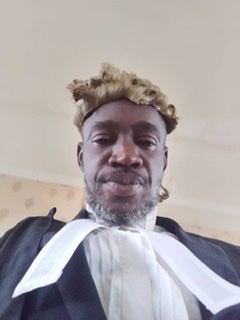
By Barr Ekeledirichukwu Asikaogu Oruwari

The tearful words of Lolo Nneka Chris-Asoluka, widow of the late Dr. Chris Asoluka, at the recent “Owerri Honors Dr. Chris Asoluka” memorial struck the conscience of an entire people. Her pain was raw, her lament heart-wrenching. She spoke not just for herself but for all who have suffered the daily agony of navigating the hellish Nekede–Obinze–Ihiagwa road — a death trap that denied mourners the dignity of seeing off a beloved son of Owerri. It is a national shame that in 2025, a family must bury their dead through muddy gullies and failed promises.
But let no one twist this moment of pain into a sentimental smokescreen. The truth must be told — Owerri political leaders are the architects of this disgrace. They are the ones who betrayed their own people. They sabotaged a working vision, traded away progress for crumbs of power, and watched with folded arms as roads crumbled and communities suffered.
Let’s rewind.
That road — yes, that same road — was under active construction during the administration of Dr. Ikedi Ohakim. It was not a standalone project, but a strategic component of his Outer Ring Road masterplan designed to open up the federal institutions corridor and decongest Owerri metropolis. Bridges were being built, drains were under construction, and the project was moving.
Then came 2011, the year Owerri leaders committed political suicide and dragged their own people into darkness.
They conspired to topple Ohakim, the one governor who had a genuine plan to transform Owerri. They replaced him with Rochas Okorocha, whose reign of white-elephant projects and unaccountable governance plunged the state into infrastructural decay. But make no mistake — it was Owerri leaders who handed him the keys.
For eight solid years, they controlled the heart of government:
They produced the Deputy Governor — Jude Agbaso.
They led APGA, the party in power.
They had an Owerri man in the House of Assembly representing Ihiagwa.
Even the Owerri-zone Senator played a key role in the political ambush that unseated Ohakim.
And what did they do with all that power?
They abandoned their own people.
They drove away contractors.
They diverted funds.
They watched the road rot.
They didn’t just abandon the Nekede–Ihiagwa road. They murdered the entire vision:
Orji–Ukworji–Mbaitoli road — Dead.
Works Layout erosion control — Abandoned mid-stream.
Orji town and Egbeada ultra-modern water projects — Forgotten after a high-profile commissioning by President Jonathan.
Toronto–Road Safety link, Naze axis, Inner Ring Road flyovers — All casualties of their political greed.
Let the record reflect: these were not the failures of Governor Hope Uzodimma. No. He inherited a broken system, looted files, abandoned sites, and bitter communities. Yet, with quiet resolve, he is rebuilding — Owerri–Orlu, Owerri–Okigwe, Owerri–Mbaise, and several arterial routes are under active reconstruction.
Today, Lolo Nneka’s sorrow should pierce the conscience of anyone who still dares to defend the Owerri political elite of 2011–2019. They failed their people. They betrayed their mandate. They traded away dignity for political expediency. Their hands are not just dirty; they are drenched in the shame of communal neglect.
It is time for Owerri zone to confront its own demons. Instead of sentimental outbursts or revisionist narratives, let them ask themselves:
What did we do with the power we had?
Why did we destroy a working government?
Why did we kill the dreams of our children and the dignity of our elders?
May the soul of Dr. Chris Asoluka find eternal rest. And may his widow’s cry echo loud enough to awaken a generation that will no longer tolerate the hypocrisy of leaders who bury progress and return only to cry at funerals.
Owerri must rise — not with emotion, but with truth.