By Willie Amadi.
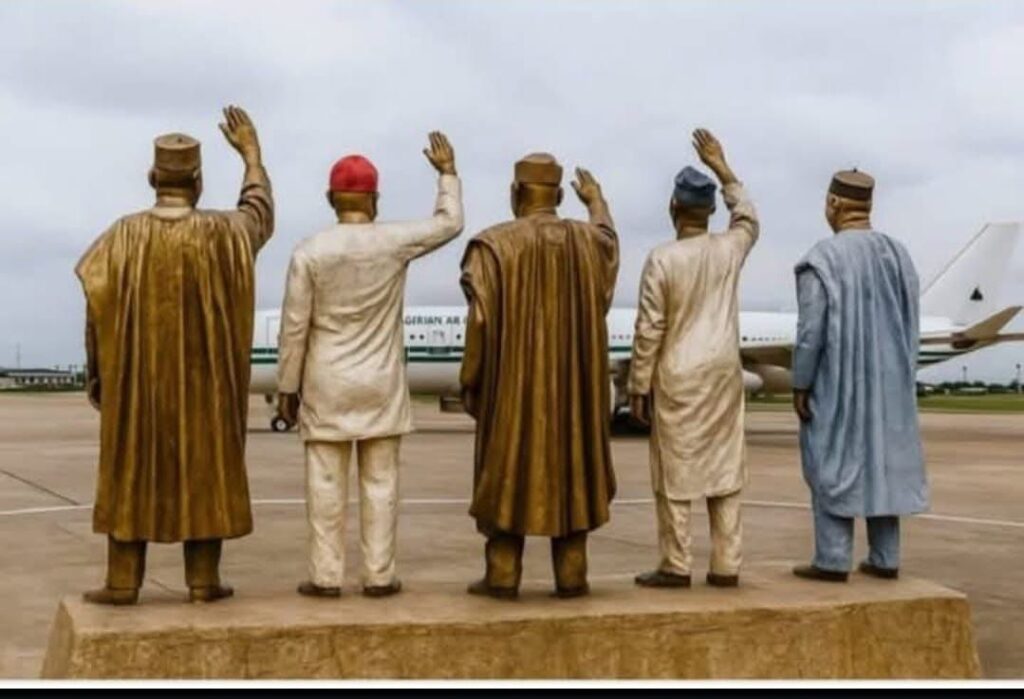
Last week, Imo Governor, Lagos Governor and other Governors saw the President of Nigeria off at the Nnamdi Azikiwe International Airport Abuja, who left the country on a 10-day working vacation to the United Kingdom and Paris.
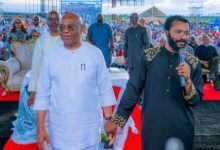
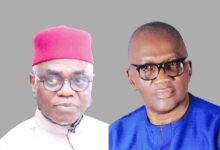
Conventionally, you cannot be present in such brief occasion if the President’s protocol list, approved by him, does not contain your name. Unknown to many, Mr. President has a private lounge at Nnamdi Azikiwe International Airport where he receives those he wants to have a last minute chat, issue instructions and make approvals before departure. Many emergency and timeous directives are issued at the Airport before departure. Uzodimma’s presence with other Governors may not just have been to go and wave him good bye and or wish him journey mercies.
Following this normal and official activity, the social media in Imo State went berserk and viral in condemnation of the Governor’s presence at the Airport. Many argued that it was a waste of time, others saw it as sycophantic, while some, particularly, Imo commentators heavily desended on their Governor with misplaced aggression, misplaced anger about the hardship in the country. Few others without any reason other than ignorance, envy and jealousy embedded in political opportunism.
For the purposes of this personal opinion, let us talk the talk and provoke the thoughts on Governor Hope Uzodinma’s penchant for connecting to the national power architecture of politics.Very few Imo people who know the broader mindset of Uzodimma’s DNA and lifestyle in business, religion and politics aswell as in private social life, DO NOT and may NEVER understand that what matters in Uzodimma’s life at all material time, is having “ACCESS” to the melting point of social, economic and political power firmament of his immediate environment. He has never played a second fiddle and can gamble or sacrifice anything around him to stay connected to the ruling class. The new friends and majority of Imolites do not have any idea and may be wasting.
The Governor of Imo from his days in business, has been close to former military players in the country. This inroads gave him the insight of the derivatives of playing in the national big league of older men in authority. In the process, he has had to suffer personal humiliation to break into the centre of the cartel at great costs, while many have continued to tap from that enermous goodwill-yielding sacrifices that has attracted success in political appointments and economic yield to them.
I recall my personal conversation with him in 2016 in his room at Amazon street Maitama Abuja. He had invited me for a very important assignment. He said to me… “Ukwa, do you know that some people do know how to take advantage of opportunities when they see it. Whenever they have any rare opportunity to make demands from Mr. President or a Governor of what they want, the will talk about contracts, employment and appointments etc, etc. As good as these demands are of immediate need and relief, they don’t realize that they are but a one off- lifetime opportunity like asking for a mat for sleeping rather than asking for land to place the mat”
He further revealed to me how his Abuja house landlord and personal friend, the former President, late Muhammadu Buhari invited him to the villa on becoming the President of Nigeria and asked him what he wants him to do for him as his friend. In reply, Uzodinma, then a Senator representing IMO West said “Your Excellency, I want you to grant me ACCESS TO VILLA always sir”. This is the strategic Hope Uzodinma, for you !
After the 2019 Governorship election, he was eventually declared the Governor of Imo State on the 15th of 2020. It is a notorious fact that he had unfettered access to the villa throughout President Buhari’s eight year tenure which ended in 2023. This powerful ACCESS CARD gave him an edge over the rest of his colleagues who in their difficult moments used his access card to penetrate the Presidency to receive immediate attention to solve difficult situations affecting their States.
This unfettered access resulted in Mr President’s visit to Imo State as the first Presidential visit in Nigeria after he was sworn in as Mr. President. Imo was Buhari’s second home as he honored all invitations to the State and attended in person, not by proxy. It was that unfettered ACCESS that made Governor Hope Uzodinma to convince Mr. President to reopen and revisit the rested issue of Alvan Ikokwu College of Education becoming a University of Education, which former Governors unrelentlesly tried to bring to fruition. Uzodinma did it within his first tenure. The conversion of Federal Medical Center Owerri to Federal University Teaching Hospital, the approval of establishment of a Naval Base in Imo State to support the highly needed dredging of Orashi-Oguta river channel into a seaport connecting the few nautical miles into the Atlantic Ocean to became an emerging reality with the huge economic transformation a seaport will bring into the commercial lives in Imo and the South East when actualised. It is also this same ACCESS that brought the approval for the State to construct the refundable Owerri-Orlu, Owerri to Okigwe, Owerri-Umuahia and recently Owerri to Elele round about federal roads. The list is endless.
Now my question is,
“Who is benefitting in this ACCESS and FREQUENT VISITS TO THE VILLA in Abuja ?
Are IMO MASSES the beneficiaries or Hope Uzodinma as an individual considering where we all met Imo State between 2011-2019 ?
We ought to be extremely grateful to Governor Uzodimma for all he is doing to reposition our State in the hearts of any sitting President in order to bring due and undue advantages to the State despite the discomfort he may personally experience in the Presidecy while trying to push Imo agenda into the competing power bracket with othe States of the federation.
Finally, if waving goodbye to Mr. President as Chairman of APC Governors Forum, frequent and demanding visits to Abuja for Imo’s development. Fighting for Imo’s right within the APC party in terms of seeking for appointments of Imo citizens, making intentional humiliating sacrifices to activate the benefits of the “ACCESS CARD”, he should for God’s sake be appreciated.
A lazy Governor with a competent cabinet and a cooperative civil service will not bother taking frequent risks in the air to pursue limited opportunities and low hanging fruits within the Presidency. Of what use are the appointees if they cannot hold the State running while the Governor is away or will it be better to simply sit down in Imo, play local politics and enjoy the comfort zone and pecks of the office as his predecessors did.
If we are witnessing high quality road networks taking place accross the three zones, Construction of a world class International Conference Center, Flyover, Civil Service reforms, Steady fight against insecurity, Construction of the multi billion naira Egbema Power Station which will guarantee a minimum of 18 hours power supply in Imo State amongst many others, WHY ARE WE DOGS IN THE MANGER ?
The above achievements and many more makes is sensible and imperative for this continued engagements with the Abuja power block to seek for more federal presence in our State through such sustained and follow up visits, notwithstanding the attendannt humiliating servitude in Abuja. Mbakwe of blessed memory did same and also cried in addition. Great leaders make unhidden sacrifices like pregnant women in families. .
It is therefore very demoralising and discouraging that while the Governor takes these travel risks, undergo personal humiliation before power brokers, ministries, department and agencies of government to bring Imo to the front burner in the national cake- sharing and dividends of democracy scramble, the encouragement his brothers and sisters back home should give him, is to rather vilify, abuse and condeme every sincere intentions, even before he embarks on their implementation.
If I were Governor Uzodimma, I will stop visiting Abuja henceforth, give myself a good break for the remaining two and half years and play with IMO treasury like one of his predecessors who took Imo on an eight year cruise, dancing and partying with Imolites, as a preferred sit-at- home government that we are painfully rebuilding today. If Governor Uzodimma adopts that module, Imolites will be forced to see the difference and cry once again, since to them, humility is self agradisement.
However, history and posterity will vindicate Uzodinma and I believe that he will return to Imo as a Hero after his service having enthroned the Charter of Equity for a peaceful and fair transition, God willing.
Keep representing, Governor Hope Uzodinma. Keep tolerating as a father of all. Keep the flag flying, for the future beckons from today’s testimonial of service.
Willie Amadi ✨
LL.B, BL, LL.M, Ph.D inview & Scholar at Cambridge.