By Ethelbert Okere

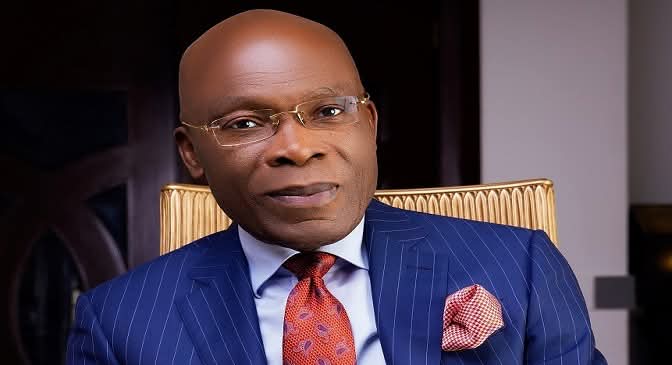
Of the many honours, both at home and abroad, that Imo state-born Tech guru, Chief Leo Stan Ekeh, has received over the years, the one he received recently from his kinsmen in Imo state is perhaps the most significant. In the Igbo parlance, a Dike (warrior) is not yet a Dike until he is so recognized by his people
A forthright ago, Leo Stan, as he is more popularly known, was hourned by the government and people of Imo state with an award of Distinguished Star of Imo State (DSI) as part of celebrations marking the 50th anniversary of the creation of the state.There were twenty one other indigenes of the state who were honoured in that category, and they include Professor Michael J.C. Echeruo, an erudite scholar of international repute, Professor Maurice Iwu, a renowned scientist, Ambassador Kema Chikwe, a well known politician and administrator, Mr. Ernest Ebi, a renowned banker, Mr. Mike Okiro, a former Inspector-General of the Nigerian Police Force, Chief John Enyiogosi, a well-known community leader in the state, Rev. Prof Emeka Emeakaroha, a notable Catholic Priest and Dr. Walter Ofonagoro, former minister of the Federal Republic of Nigeria.
Also in that category were thirteen others who were honoured posthumously. They include the late Senator Arthur Nzeribe, the late Professor George Obiozor, the late Dr. Kingsley Ozumba Mbadiwe, the late Pascal Dozie etc. These twenty one were among a total of fifty others, both dead and alive, who were hooured in three other categories. The DSI categories in which Ekeh was honoured was for those who made “sustained impact in economic development, infrastructure, trade and investment” in the state.
Leo Stan is a recipient of several national and international awards of honour.In 2001, he received the ICON OF HOPE award by the administration of President Olusegun Obasanjo. This was followed in 2003 by the national honour of the Order of the Federal Republic (OFR). In 2019, he received the National Productivity Merit Award by the Muhammadu Buhari administration for his “sustained leadership in information and communication technology (ICT)”. This chain of local recognitions culminated in the highly prestigious Forbes Best of Africa Leading Tech Icon award on August 6, 2021. The award was in recognition of his contributions to the tech industry in Africa. Earlier, through his first tech company, Task Systems Limited which he founded in 1989, Ekeh had gotten multiple partner awards from global tech giants such as Microsoft, HP, and Compaq.
This writer is a direct beneficiary of Ekeh’s earlier exploits in Information Communication and Technology. Task Systems Ltd, which was initially located at 32 Kadiri street Alausa, Ikeja, facilitated the pre-press production of my book, NIGERIA: AGENDA FOR A MODERN POLICE FORCE, following which a sister company, New Concept Media Limited, located at the same address, published it in 1990. The following year, 1991, the book won an award for Literary Excellence by the Association of Nigerian Authors under the category of First Author, Non-Fiction. Incidentally the publishing company, Ekeh’s New Concept Media Limited, was also given an award for being able to spot a “promising young author” and “recognizing a manuscript that made a profound contribution to a crucial national debate”.
After the event which held at the Sheraton Hotel, Ikeja Lagos, Ekeh told a group of journalists that covered it that for my contribution in bringing his young publishing outfit to such prominence, he would continue to publish my works provided that they are of the same quality as the award-winning one. Needless to say, New Concept published my next work, NIGERIA AND THE SEARCH FOR LEADERSHIP: A RETURN TO THE EAST in 1996.
I first met Leo Stan when I was the Business And Economy editor of Champion Newspapers and he was pioneering the computerization of Nigeria’s print media through Task Systems. As a matter of fact, it is on record that Task Systems facilitated the computerization of over 95 per cent of Nigeria’s publishing outfits as well as advertising agencies. The company grew so rapidly that within a few years, it had moved out of Alausa to the highbrow Allen avenue, also in Ikeja.
I remember capturing a story one of my reporters did on that with the caption: “Task Moves To Allen”. By 1992 or thereabout, Task had moved to Victoria Island, Lagos and started giving birth to other sister tech companies like Technology Distribution TD Africa, Task Direct, ITEC Solutions, finally culminating in the founding of Zinox Technologies in 2001. Zinox propelled Ekeh to continental prominence. It became West Africa’s first internationally certified branded computer, the first to receive Microsoft’s Window Hardcore Quality Labs (WHQL) certificate and the first Nigerian ICT company to earn 1S09001 certificate. Through Zinox, Leo Stan was able to prove that Nigerian made computers could compete globally.
I have gone this length to catalogue Chief Dr. Leo Stan Ekeh’s exploits nationally and internationally in the process of getting to the point where we can ask the question, what then is the big deal about the Imo award?
It is in the course of finding an answer to the above question that we can properly situate Leo Stan, which is that in spite of his exploits nationally and internationally, Ekeh remained a home boy. Agreed, his profile at both the national and international levels is quite impressive but they probably would not have been enough to earn him the recognition at home if his kinsmen did not have a feeling of his greatness. His Imo kinsmen did not have to go to Lagos, Abuja, London or Paris to see things for themselves. Leo Stan and his tech savviness are very much seen, felt and smelt among his people in Imo. Leo is not a politician but it would be quite difficult to count more than three persons who are better known in the state than him. The reason is simple. He is not like other high achievers who are indifferent to what happens at home, preferring to be seen as national figures.
As a matter of fact, our dear state, Imo, is particularly unlucky to have an uncountable number of well educated people, especially “professors” who behave, talk and act more like Liberians than Imolites. These “professors”, prefer to profess their professorship more on the social media than in the classrooms, engaged in teaching and research. When challenged, they claim to be “visiting professors” to unknown universities abroad, and you would never fail to notice their abysmal lack of grasp of issues at home.
But Imolites are consoled by the fact that they have people like Leo Stan who make deliberate efforts to understand their problems and identify with their fears and aspirations. Although his Leo Stan Ekeh Foundation operates nationally and internationally, he has through it impacted on his Imo kinsmen both individually and institutionally: in human capital development, especially in the area of tech-techniques, entrepreneurship and awards of scholarships. A few years ago, the Foundation launched three entrepreneurship centers at three universities in the country, including the Imo State University (IMSU). In the last two years, the IMSU center has graduated over 200 young people as the first set of beneficiaries of the programme. The trainees were taught skills in entrepreneurship by experts drawn from Nigeria as well as the United States of America and the United Kingdom. Trainees were given stipends to facilitate their movement to and fro the venue of the programme and at the end of which each was given a brand new Z-pad tablet and some even received interest-free loans to start their own businesses.
Interestingly, it is from the same Imo State University that the likes of Chidi Odinkalu, one of the numerous Nigerian social media professors, graduated from. Odinkalu is said to be a “visiting professor” in a university in America but his alma mater has a vibrant Law Faculty where he could deploy his vast knowledge to impact on the younger ones. It is even doubtful if more than just a few graduates of that faculty know that he passed through there. Instead, his past time is to indulge in reckless attacks on his fellow members of the Imo elite on social media in the name of activism.
Leo Stan has also been highly involved in the Imo state government’s Skill-Up Imo programme. Apart from making cash donations to support the scheme, his Zinox Group has employed a good number of graduates of the scheme. At the graduation of the second batch of the 15,000 trainees in September 2023, Ekeh presented each of graduates with a brand new Zinox or HP Laptops equipped with cutting-edge specifications for high key performance. Speaking at the event of which he was the Special Guest of Honour, Ekeh commended Governor Hope Uzodimma for the enduring legacy he has instituted through the Skill-Up Imo Programme. Said he : “its unprecedented. I don’t know what inspired the governor. He has put a futuristic system in place”. To mark his 70th birthday anniversary which comes up in a couple of days from now, Ekeh has unfolded a university scholarship scheme for 1,000 indigent young men and women to study Computer Science in Nigerian Federal Universities. Of course, Imo state indigenes will be among the beneficiaries who, according to him, will not be bonded. The beneficiaries are expected to “disrupt global wealth equation in favour of Nigeria and defend her tech independence”.
The Imo Awards, carefully thought out by the state’s governor, His Excellency, Senator Hope Uzodimma, is the first of its kind in the state. Governor Uzodimma will not be on seat as a governor by the time the state celebrates the next milestone of its creation, but he has crossed a threshold that will redefine the state. For instance, the Awards offered the good people of Imo state the first opportunity in over two decades to come together as a people regardless of partisan differences.