
Influence As Strategy: Understanding The Cubana Chief Priest Moment In Nigeria’s Youth Politics How Influence, Strategy, And Youth Energy Are Quietly Reshaping Nigeria’s Political Conversation

Politics, at its most effective, is the art of recognizing influence where it truly resides. Nations sometimes struggle not because they lack ideas, but because they fail to identify those capable of translating those ideas into social energy. When that recognition happens, it quietly alters the rhythm of public engagement and opens new pathways between leadership and the people.
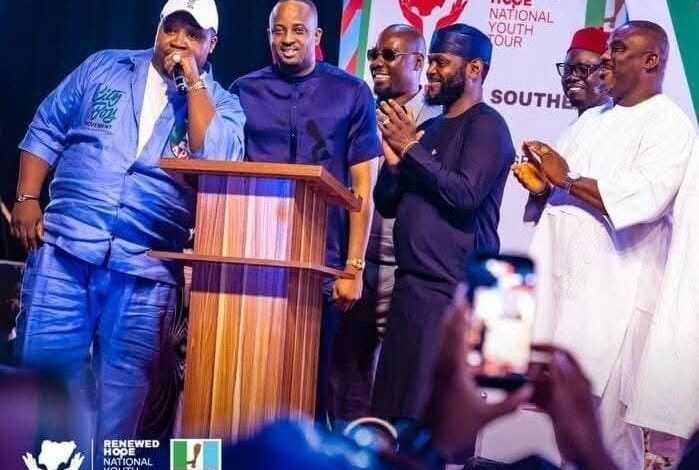
In identifying Mr. Pascal Okechukwu, popularly known as Cubana Chief Priest, for a youth-facing role within the broader political conversation, Seyi Tinubu appears to have demonstrated a keen understanding of the strategic value of influence. In contemporary Nigeria, where millions of young people often feel distant from formal political structures, bridging the gap between governance and the street requires more than official titles. It requires credibility, reach, and a voice the youth instinctively trust.
Dr. Pascal Okechukwu represents that rare convergence. For years, the political establishment has struggled to speak convincingly to a generation that often feels remembered only during election seasons. The consequence has been a widening psychological gulf between the governed and those who govern. Into that vacuum have stepped cultural figures whose influence travels far beyond traditional political messaging.
The decision to recognize and deploy such influence therefore reflects a deeper strategic calculation. Influence, in this sense, becomes not merely a social asset but a political instrument; one capable of translating policy ambition into public engagement.
Predictably, critics have raised objections. Some question the propriety of entrusting such responsibility to a figure whose public persona has long been associated with social prominence and flamboyance. Yet beneath some of these criticisms lies a familiar human paradox: the same voices casting doubt today might have embraced the role with enthusiasm had the opportunity been theirs. In politics, condemnation often conceals the quieter language of envy.
What is increasingly evident, however, is the ripple effect of Okechukwu’s involvement. Through his charisma, expansive network, and persuasive oratory, he has begun drawing young people into a political conversation many previously viewed with indifference. His engagement does not merely address the youth; it speaks with them, in a cultural vocabulary they recognize as authentic.
This is where his much-discussed Midas touch assumes deeper significance, not in spectacle, but in the ability to convert social capital into political connectivity. For the first time in recent memory, many young Nigerians feel that someone within their cultural orbit is helping translate the language of governance into something relatable and accessible.
Such engagement aligns naturally with the aspirations behind President Bola Ahmed Tinubu’s Renewed Hope Initiative. Every reform agenda requires interpreters capable of carrying its philosophy beyond policy documents into everyday life. In that regard, the political sagacity and magnanimity demonstrated by Cubana Chief Priest in mobilizing youth enthusiasm are gradually helping to construct a bridge between aspiration and participation.
Even those who initially doubted the broader project are beginning to listen. Persuasion, after all, is rarely achieved through volume alone. More often, it emerges through consistent engagement, strategic networking, and the quiet power of relatability.
For Seyi Tinubu, the foresight behind this engagement deserves recognition. Leadership is measured not only by the policies it advances but also by the alliances it cultivates. Identifying individuals capable of energizing a generation is itself a strategic act.
From the vantage point of Imo State’s youth, the message is unmistakable. Many increasingly see in Pascal Okechukwu not merely a cultural personality but a bridge; one capable of bringing youthful aspiration into closer alignment with the national vision articulated by President Bola Ahmed Tinubu.
That sense of inclusion carries responsibility on both sides. The youth of Imo State remain prepared to stand firmly behind their brother and contribute meaningfully toward consolidating the Renewed Hope mandate as the nation gradually approaches the political horizon of 2027. Yet hope, once awakened, must be sustained with sincerity and continuity. If the doors of engagement have been opened today, they must remain open tomorrow.
Ultimately, the Cubana Chief Priest moment illustrates a larger political truth captured in the very spirit of this reflection: in modern politics, influence itself has become strategy. When properly understood and responsibly deployed, it transforms social popularity into civic participation, cultural relevance into political momentum, and youthful energy into national purpose. If nurtured with sincerity and vision, this emerging alignment between influence and strategy may well prove to be one of the quiet forces shaping Nigeria’s youth politics in the years ahead.
Maduagwu Olisa Umar
Public Affairs Analyst | Political Strategist | Psychologist & Founder Senator Alhaji Umar Maduagwu Foundation (SAUMF)
Olisamaduagwuumar@gmail.com


