By Bishop C. Johnson
In the annals of democratic governance in Imo State, few episodes are as tragic or instructive as the abrupt termination of Dr. Ikedi Ohakim’s administration in 2011. This critical reflection, Ikedi Ohakim’s Vision: A Truncated Development in Imo State, captures with searing clarity the story of a visionary government cut short by what can best be described as a civilian coup—an ill-fated political gamble that sacrificed progress on the altar of propaganda and populism.
Dr. Ikedi Ohakim’s tenure (2007–2011) was not just another political cycle; it was a bold departure from mediocrity. It heralded a paradigm shift under the New Face of Imo Agenda—a strategic, forward-thinking blueprint crafted to pull Imo from the quagmire of stagnation into the path of sustainable growth. However, that vision was prematurely aborted in 2011. The so-called election that year, heavily manipulated and weaponized by misinformation, ushered in a new administration under Rochas Okorocha—an administration that did not build on Ohakim’s legacy but actively dismantled it.
What followed was not a smooth transition but a destructive rupture. Populism replaced policy. Optics trumped substance. And the people of Imo State became the ultimate casualties in a story of wasted potential and squandered opportunity. The phrase “truncated development” accurately defines what befell Imo—a vision interrupted, a roadmap abandoned, and a future mortgaged.
A Government Of Vision, Structure, And Substance
Governance is more than occupying public office; it is about visioning, planning, and institution-building. Dr. Ohakim’s administration exemplified these principles. With clearly defined goals and professionally executed reforms, his government was a master class in responsible, strategic leadership. Sadly, it was halted midstream—not because it failed, but because it dared to succeed without the blessings of entrenched interests.
Oguta Wonder Lake: A Lost Tourism Paradise
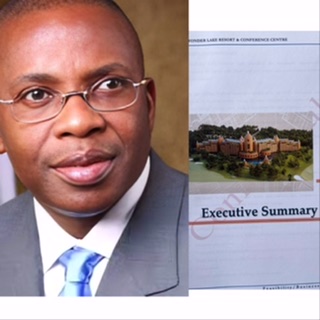
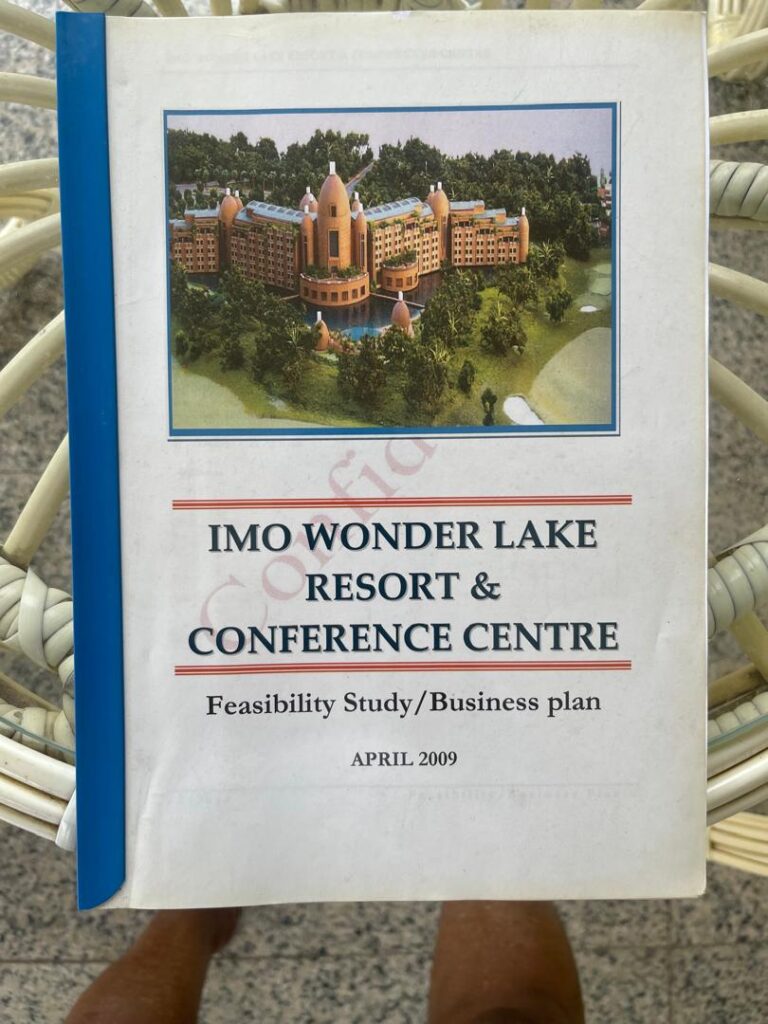
Perhaps the most ambitious of Ohakim’s diversification efforts was the Oguta Wonder Lake Resort and Conference Centre. A flagship of the administration’s tourism and economic diversification plan, it was conceived as a global tourist destination inspired by Lake Geneva and the Dead Sea.
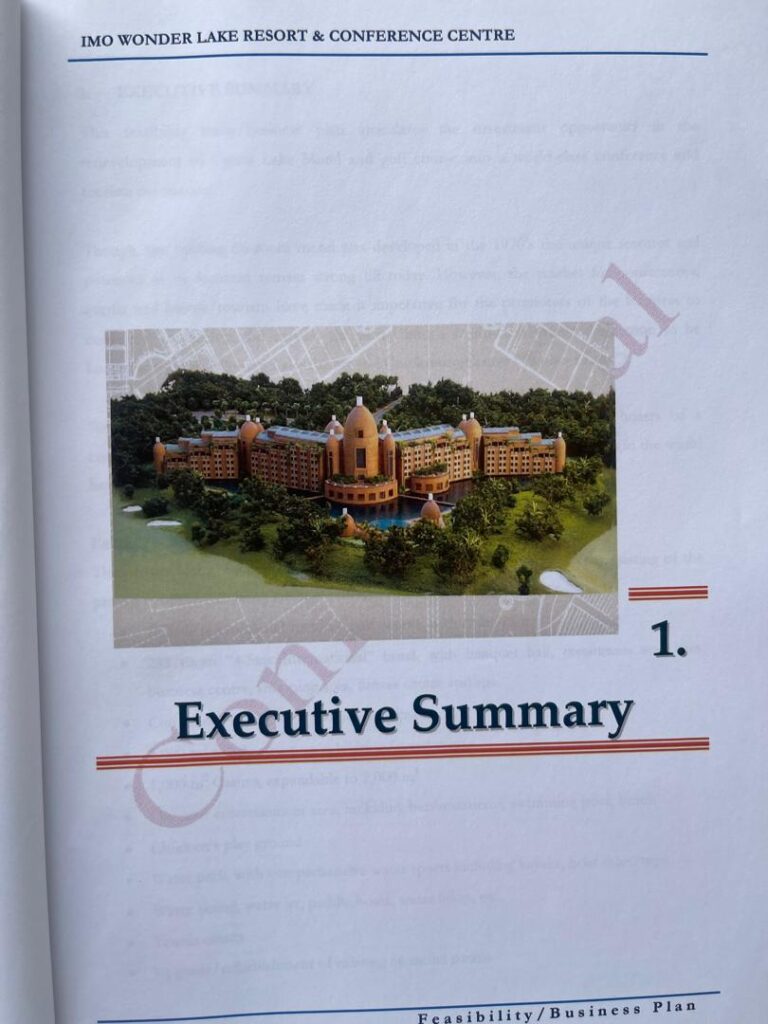
The masterplan, designed by the same firm that built the iconic Michelangelo Towers in South Africa, included:
A five-star hotel and golf course
A lakeside amusement and cultural center
A boat regatta arena
A multi-purpose conference facility
A housing estate and a shopping mall
A naval base for tourism security and logistics
Employment for thousands of Imo youths
Crucially, all the funds required for the project had been raised through a bond issuance—demonstrating Ohakim’s fiscal ingenuity and commitment to project execution. The next phase was for the developers to mobilize to site. Sadly, the incoming administration not only killed the project but misappropriated the bond funds, leaving the site to rot and the dream to die. Today, Oguta Lake stands as a haunting metaphor for lost opportunity.
Imo Freeways And Ring Road: Visionary Infrastructure*
Dr. Ohakim understood that no modern economy can thrive without an efficient transport network. Hence, the Imo Freeway Project was launched—a grid of dual-carriage expressways designed to link the three senatorial zones, major commercial hubs, and rural hinterlands.
Complementing this was the Imo Ring Road, engineered to decongest Owerri, facilitate emergency response, and enhance intra-state commerce. These were not empty political promises. Designs were completed. Contracts were transparently awarded. Initial earthworks had commenced.
But the 2011 power shift brought all progress to an abrupt halt. The succeeding administration neither advanced the projects nor provided alternative roadmaps. Today, the state grapples with infrastructural decay, rural isolation, and stifled commerce.
Establishment Of ISOPADEC: Institutional Justice For Oil-Producing Communities
One of Ohakim’s most enduring legacies is the establishment of the Imo State Oil Producing Areas Development Commission (ISOPADEC). Created to redress the historic marginalization of oil-rich communities in Oguta and Ohaji/Egbema, and the commission became a vehicle for environmental justice and localized development.
Before 2007, these communities contributed substantially to state revenue but remained deeply neglected. Ohakim changed that narrative. He not only initiated but also signed into law the creation of ISOPADEC.
Under his administration, ISOPADEC funded:
Rural electrification and water projects
Access roads, drainage, and erosion control
Boreholes, skills acquisition centres, and microcredit schemes
Community hospitals and environmental remediation
Construction of Education Infrastructure
Unfortunately, this Commission — created with noble intentions — was later politicized and starved of capacity, with subsequent administration treating it as a cash cow for cronies rather than a platform for community advancement. Sadly, ISOPADEC degenerated into a political slush fund and its original vision diluted, its impact diminished.
Oak Refinery Project: Industrial Diversification Cut Short
In a bid to further diversify Imo’s economy and create jobs, Dr. Ohakim initiated the Oak Refinery Project in Ohaji/Egbema. Land had already been acquired, concessions signed with the Federal Government under President Umaru Musa Yar’Adua, and technical partners from the United States engaged for the modular refinery.
This was a game-changing industrialization plan to reduce dependence on federal allocations. Yet again, it was abandoned—another casualty of the leadership transition in 2011. The Oak Refinery would have positioned Imo as an oil refining and petrochemical hub in the South East.
Government House Complex And Institutional Preparedness
Among Ohakim’s strategic innovations was the construction of a modern Government House Complex, complete with fortified underground bunkers. It was designed as a crisis command center, safeguarding the seat of government during emergencies or unrest—much like the security architecture of advanced nations.
Far from being a luxury, this facility reflected Ohakim’s foresight and commitment to governance continuity. But like many of his structural legacies, it was left incomplete and ridiculed. Okorocha’s government chose superficial beautification projects over strategic state infrastructure.
The New Face Of Imo Agenda: A Blueprint Ahead Of Its Time
The New Face of Imo was not a mere slogan nor a catchphrase—it was a development framework rooted in five interlinked pillars:
- Environmental Renewal – Through ENTRACO and monthly sanitation enforcement. Clean and Green Initiative – a waste to wealth genius project that was great thousands of jobs.
- Road Rehabilitation – Implemented via IROMA to maintain urban and rural roads
- Employment and Empowerment – Including a 10,000 graduate job scheme based on merit, not nepotism
- Urban Renewal and Physical Planning – Designed to restore order, zoning, and infrastructure
- Accountability and Fiscal Discipline – Anchored on due process budgeting and transparent contract awards
An integral part of this vision was the Clean and Green Initiative, which transformed Imo into one of Nigeria’s cleanest states during Ohakim’s tenure. Beyond aesthetics, it promoted public health, civic responsibility, and environmental consciousness.
Ohakim’s government was not perfect. But it was visionary, methodical, and deliberate—anchored in sustainable planning and long-term strategy. Its greatest sin? Being too structured, too serious, and too professional for a political environment intoxicated by showbiz governance, addicted to showmanship and seduced by performance gimmicks.
From Betrayal To Redemption: Lessons For 2027
The bitter irony of Imo’s political history is that its most strategic and development-focused government was brought down by propaganda, short-term populism, and a misled electorate. The consequences of that betrayal echo loudly today—dilapidated infrastructure, mounting debt, rising insecurity, and governance gimmickry.
But history is not static—it is cyclical. As 2027 approaches, Ndi Imo have a sacred opportunity to reflect and redirect. The New Face of Imo remains not just a past dream but a future-ready blueprint. The vision truncated in 2011 can be redeemed in 2027.
Imo must rise again—through structure, foresight, and leadership built not on noise but on knowledge and in depth and strategic thinking.
The choice lies with the people.
Bishop C. Johnson is a public policy expert, a National Defense and Military Strategist, a retired United States Army Captain with decades of experience in Military Intelligence. A battle tested and war proven veteran who also writes on governance and socioeconomic development.
Bishop C. Johnson is the Director General BBO2027