■ Owerri zone should align with Okigwe zone
As political calculations ahead of the 2027 Imo State Governorship election intensify, former National Organising Secretary of the All Progressives Congress (APC), Hon. Barr. Emma Ibediro, has thrown his weight behind the return of former Governor Ikedi Ohakim, describing him as the symbol of equity and justice in the ongoing debate over the Imo Charter of Equity.
In an exclusive interview, Ibediro, a political heavyweight, chronicled the historical and political journey of Imo’s zoning arrangement, tracing its roots to the early days of the state’s political evolution and arguing that Okigwe zone deserves the next shot at the Douglas House.
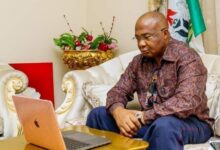
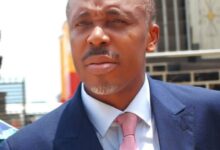
A Voice Of Experience
With a rich political resume that spans over two decades, Ibediro has served in various key positions including Executive Chairman of Onuimo Local Government Area, State Secretary of the APC, multiple commissioner roles, and most notably as a national officer of the ruling party.
Reflecting on the contentious Imo Charter of Equity, Ibediro explained that the principle, initiated by the Imo Elders Council and endorsed by Governor Hope Uzodimma, was designed to create a sustainable and fair rotation of power among the state’s three senatorial zones – Orlu, Okigwe, and Owerri – irrespective of size or population.
Equity Is Measured By Action, Not Rhetoric
“The Governor made it clear: Orlu zone, having enjoyed the governorship for 16 uninterrupted years, should step aside in the spirit of fairness,” Ibediro stated. “He laid down a test—whichever of the remaining zones delivers more votes in the 2023 election would get his backing in 2027. Okigwe delivered 128,000 votes despite having only six LGAs, while Owerri with nine LGAs delivered 98,000.”
To Ibediro, that outcome speaks volumes. “He that seeks equity must come with clean hands. Equity also aids the vigilant, not the indolent.”
A Historical Argument For Okigwe
Ibediro revisited past transitions in Imo’s governorship to reinforce his argument. Dr. Sam Mbakwe from Okigwe was the first civilian Governor, whose term was cut short by the 1983 military coup. Similarly, Chief Evan Enwerem from Owerri zone had his tenure truncated by the 1993 coup.
Following the return to democracy in 1999, leaders from all zones agreed to give Orlu a chance under the then newly agreed Charter of Equity. The result was the election of Chief Achike Udenwa from Orlu, who served two full terms. In 2007, the rotation naturally pointed to Okigwe, which led to the emergence of Dr. Ikedi Ohakim.
But in 2011, Ohakim was voted out after what Ibediro described as “a well-orchestrated conspiracy involving religious and political actors, particularly from the Owerri zone.” He alleged that church-led campaigns of calumny and internal betrayals cost Okigwe its rightful second term.
Bring Back Ohakim
Now, Ibediro believes the time is ripe to correct that “historical injustice” by allowing Ohakim to return and complete what he started. “Owerri has no aspirant limited to a single term. Okigwe does—Dr. Ikedi Ohakim. He is the logical, constitutional, and equitable choice.”
Ibediro noted that Ohakim’s return would also help heal old wounds. “If Owerri wants to mend fences, let them support Okigwe now, and take their full term next. It’s a win-win.”
Beyond Zoning: Economic And Developmental Inequity
The APC stalwart pointed out that while Owerri enjoys the benefits of being the state capital—with concentrated infrastructure, educational institutions, markets, and health facilities—Okigwe remains underdeveloped.
“It’s not just about rotating power. It’s about balancing development. Okigwe holds the short end of the stick in every index. Supporting a competent Okigwe son like Ohakim could begin to address that.”
Ohakim: The Consensus Candidate?
For Ibediro, Ohakim is not only experienced but also politically marketable, well-connected across all zones, and aligned with Governor Uzodimma’s developmental agenda.
“Governors who return for a second term after an interruption tend to perform better,” he said. “With his wealth of experience and commitment to equity, Dr. Ikedi Ohakim is not just an aspirant—he is the consensus equity candidate Imo needs in 2027.”
As the 2027 race inches closer, it appears the battle may not just be about party lines, but about history, fairness, and the long road to equity in Imo State.