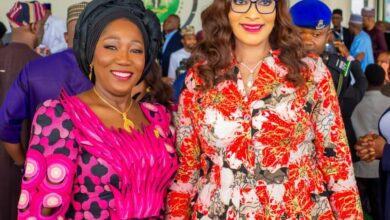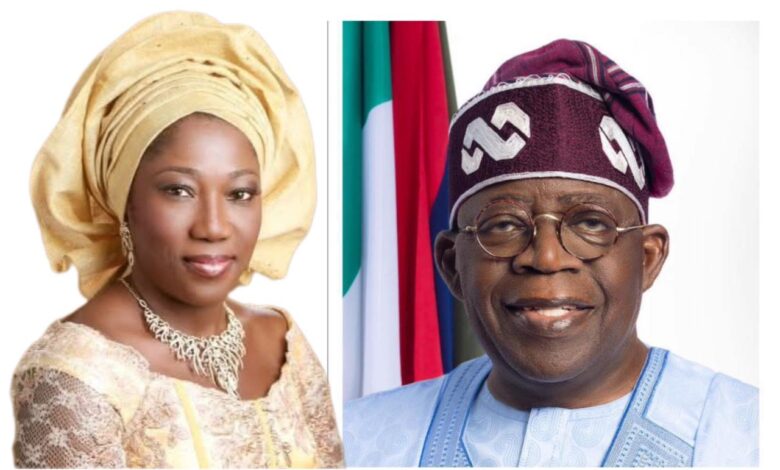
President Bola Ahmed Tinubu has approved the diplomatic posting of former First Lady of Imo State, Barrister Chioma Priscilla Ohakim, as Nigeria’s Ambassador to Warsaw, Poland.

Barrister Ohakim’s appointment was announced as part of a broader diplomatic deployment involving 31 career and 34 non-career ambassadors to various countries and foreign missions, including the United Nations.
The development was confirmed in a statement released on Friday by the President’s Special Adviser on Information and Strategy, Bayo Onanuga.
According to the statement, the Senate had earlier confirmed the ambassadors-designate in December before the President approved their respective postings.
Barrister Ohakim, a seasoned legal practitioner and former First Lady during the administration of Ikedi Ohakim, will represent Nigeria in Warsaw, strengthening diplomatic, economic, and cultural relations between Nigeria and Poland.
Her appointment places her among prominent political and professional figures selected by the administration to represent Nigeria across key foreign missions.
Other notable non-career ambassadorial postings approved by the President include former Abia State governor Okezie Ikpeazu, who will serve as Nigeria’s Ambassador to Spain, and former Interior Minister Abdulrahman Bello Dambazau, who has been posted to China.
Others include Reno Omokri to Mexico, Jimoh Ibrahim as Nigeria’s Permanent Representative to the United Nations, and Femi Fani-Kayode to Germany.
The Presidency also disclosed that the Ministry of Foreign Affairs has already received agrément from the United Kingdom for the High Commissioner-designate, Ambassador Aminu Dalhatu, while France has granted agrément for Ambassador Ayo Oke.
In line with diplomatic procedures, the ministry has forwarded the names of the other nominees to their respective host countries requesting formal approval.
President Tinubu has directed the Ministry of Foreign Affairs to immediately commence an induction programme for all ambassadors-designate and High Commissioners ahead of their official deployment.
The new postings form part of the administration’s efforts to strengthen Nigeria’s diplomatic presence and advance the country’s interests across the globe.
Full list……..
NON-CAREER:
- Senator Grace Bent → Lome, Togo
- Sen. Ita Enang → South Africa
- Ikpeazu Victor → Spain
- Nkechi Linda Ufochukwu → Tel-Aviv, Israel
- Mahmud Yakubu → Qatar
- Paul Oga Adikwu → The Vatican City (Holy See)
- Vice Admiral Ibok-Ete Ekwe Ibas → The Philippines
- Mr. Reno Omokri → Mexico City, Mexico
- Hon. (Engr.) Abasi Braimah (FMHR) → Budapest, Hungary
- Mrs. Erelu Angela Adebayo → Portugal
- Barr. Olumilua Oluwayimika Ayotunwa → Tokyo, Japan
- Rt. Hon. Ugwuanyi Ifeanyi Lawrence → Athens, Greece
- Barr. Chioma Priscilla Ohakim → Warsaw, Poland
- Aminu Dalhatu → United Kingdom (UK)
- Lt. Gen. Abdulrahman Bello Dambazau → Beijing, China
- Hon. Tasiu Musa Maigari → Gambia
- Olufemi Pedro → Australia
- Barr. Muhammed Ubandoma Aliyu → Argentina
- Lateef Kayode Are → USA
- Amb. Joseph Sola Iji → Russia
- Sen. Jimoh Ibrahim → UN Permanent Representative
- Femi Fani-Kayode → Germany
- Prof. Isaak Folorunso Adewole → Ottawa, Canada
- Ajimobi Fatima Florence (F) → Austria
- Mrs. Lola Akande (F) → Sweden
- Ayodele Oke → France
- Yakubu N. Gambo → Saudi Arabia
- Senator Prof. Nora Ladi Daduut → Seoul, South Korea
- Barr. Onueze Chukwujika Joe Okocha SAN → Dublin, Ireland
- Dr. Kulu Haruna Abubakar → Tunis, Tunisia
- Rt. Hon. Jerry Samuel Manwe → Port of Spain, Trinidad & Tobago (T&T)
CAREER AMBASSADORS:
- Amb. Nwabiola Ezenwa Chukwumeka → Cote d’Ivoire
- Besto Maimuna Ibrahim → Niamey, Niger
- Monica Okwuchukwu Enebechi → Sao Tome and Principe (STP)
- Amb. Mohammed Mahmud Lele → Algiers, Algeria
- Endoni Syndoph Paebi → Ouagadougou, Burkina Faso
- Ahmed Mohammed Monguno → Cairo, Egypt
- Amb. Jane Adams (nee Okon) Michael (F) → Kingston, Jamaica
- Amb. Clark-Omeru Alexandra (F) → Lusaka, Zambia
- Chima Geoggrey Lioma David → Bamako, Mali
- Amb. Odumah Yvonne Ehinosien → Malabo, Equatorial Guinea
- Amb. Wasa Segun Ige → Beirut, Lebanon
- Ruben Abimbola Samuel (F) → Rome, Italy
- Amb. Onaga Ogechukwu Kingsley → Maputo, Mozambique
- Amb. Magaji Umar → Kinshasa, DR Congo
- Amb. Muhammad Saidu Dahiru → New Delhi, India
- Amb. Abdussalam Habu Zayyad → Dakar, Senegal
- Amb. Shehu Ilu Barde → Accra, Ghana
- Amb. Aminu Nasir → Ethiopia
- Abubakar Musa Musa → N’Djamena, Chad
- Amb. Haidara Mohammed Idris → The Hague, Netherlands
- Amb. Bako Adamu Umar → Rabat, Morocco
- Amb. Sulu Gambari Olatunji Ahmed → Malaysia
- Amb. Romata Mohammed Omobolanle (F) → Tanzania
- Amb. Shaga John Shamah → Botswana
- Salau, Hamza Mohammed → Tehran, Iran
- Amb. Ibrahim Danlami → Kenya
- Ibrahim Adeola Mopelola (F) → Cotonou, Benin
- Amb. Ayeni Adebayo Emmanuel → Brussels, Belgium
- Amb. Akande Wahab Adekola → Berne, Switzerland
- Amb. Arewa (nee Adedokun) Esther (F) → Windhoek, Namibia
- Amb. Gergadi Joseph John → Libreville, Gabon
- Amb. Luther Ogbomode Ayo-Kalata (F) → Sierra Leone
- Danladi Yakubu Nyaku → Khartoum, Sudan
- Bello Dogon-Daji Haliru → Bangkok, Thailand