By Ochiagha Nnanna Okere
Politics often produces many aspirants, but history remembers only those whose experience, character, and vision inspire public confidence.
As Imo State gradually approaches the 2027 governorship election, political conversations are no longer centred merely on who intends to run. Increasingly, the focus is on who possesses the qualities required to sustain the state’s progress while providing purposeful and inclusive leadership.
Governor Hope Uzodimma may have unwittingly set the benchmark.
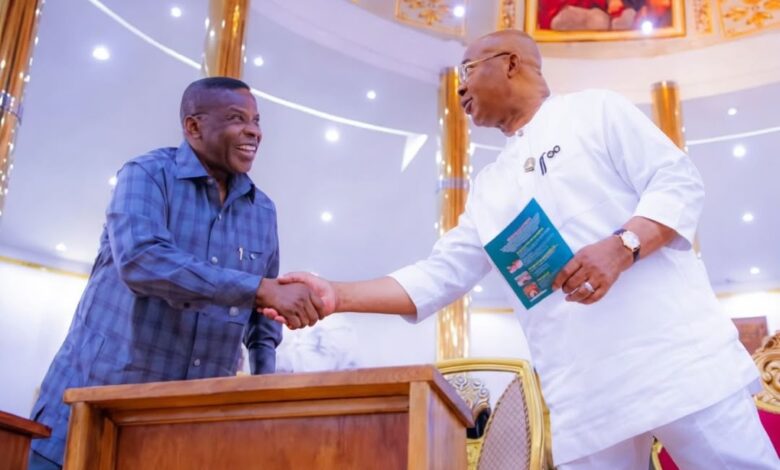
In his recent interaction with members of the Imo State Council of Elders and the Traditional Rulers’ Council, the governor articulated what many regard as the defining attributes of his preferred successor. According to him, the next governor of Imo State should be a clear-headed leader, guided by the fear of God, committed to consolidating rather than reversing the achievements of the present administration, and capable of emerging through consensus in keeping with the principles of equity, unity, and stability.
Those were not casual political remarks. They amounted to a leadership template.
Expectedly, the governor’s comments have intensified public discourse across the state. From community meetings and professional circles to markets, campuses, and town halls, conversations increasingly revolve around one fundamental question: Who best embodies these qualities?
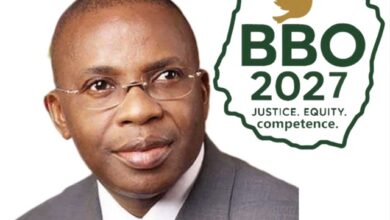
For a growing number of political observers, stakeholders, leaders, and supporters, the answer is former Governor Chief Dr. Ikedi Godson Ohakim.
This conviction is rooted less in political sentiment than in the belief that leadership is ultimately measured by competence, experience, integrity, and the capacity to govern effectively under demanding circumstances. Elections may be won with promises, but governance is sustained through preparation, judgment, and tested leadership.
Ohakim is no stranger to the demanding responsibilities of public office. His years in government exposed him to the complexities of public administration, economic management, infrastructure development, institutional reforms, and policy implementation. Supporters argue that this experience gives him an advantage that few prospective contenders can claim.
More importantly, many believe he exemplifies the very qualities Governor Uzodimma identified.
A clear-headed leader is one who approaches governance with vision, maturity, and sound judgment rather than emotion or political expediency. Admirers of Ohakim contend that his leadership style has consistently reflected those attributes, demonstrating an ability to take difficult decisions while maintaining focus on the broader interests of the state.
The governor also emphasised the importance of the fear of God. In a political environment where integrity and public trust have become increasingly valuable, supporters describe Ohakim as a leader whose appreciation of moral responsibility and public accountability has remained central to his approach to leadership. They believe genuine service is impossible without humility before God and respect for the people.
Equally significant is Governor Uzodimma’s insistence that his successor should consolidate existing achievements rather than reverse them. Development, after all, is a continuum. Every administration inherits foundations laid by its predecessors and bears the responsibility of strengthening them for future generations.
Many who support Ohakim believe he possesses both the experience and statesmanship to build upon worthwhile initiatives, preserve institutional stability, and introduce fresh ideas capable of accelerating Imo State’s development without sacrificing continuity.
His supporters also point to another defining strength: his enduring grassroots connection.
Beyond political structures and elite endorsements, they argue that Ohakim has maintained close ties with ordinary citizens—farmers, traders, artisans, professionals, traditional institutions, women, and young people. They see this accessibility as an indispensable quality in democratic governance because effective leadership begins with understanding the everyday realities of the people one seeks to serve.
Governor Uzodimma equally highlighted consensus, consultation, and unity as indispensable ingredients in the succession process. These principles resonate deeply in a diverse state like Imo, where political stability depends largely on inclusion and mutual respect.
Supporters maintain that Ohakim’s political maturity, extensive relationships across the state’s three senatorial zones, and wealth of administrative experience uniquely position him to foster reconciliation, strengthen unity, and promote inclusive governance.
The challenges awaiting the next governor are substantial. Job creation, economic diversification, infrastructure renewal, quality healthcare, educational advancement, improved security, and investment attraction will demand far more than campaign rhetoric. They will require tested leadership, strategic thinking, and the courage to make decisions that place the collective interest above narrow political considerations.
Ultimately, the electorate alone will determine who governs Imo State after 2027. Democracy provides every qualified aspirant with an opportunity to present his vision and credentials before the people.
Yet, within the context of Governor Hope Uzodimma’s publicly stated expectations for his successor, many believe Ikedi Ohakim stands out as a compelling fit. To his supporters, he represents experience without complacency, leadership with compassion, continuity without stagnation, and governance anchored on accountability, inclusiveness, and service.
Whether that conviction ultimately translates into electoral success remains to be seen. What is beyond dispute, however, is that the conversation about Imo’s future has begun in earnest. And as the search for the state’s next leader gathers momentum, Chief Dr. Ikedi Godson Ohakim will undoubtedly remain one of the central figures in that conversation—not merely because he once occupied Douglas House, but because many believe he possesses the qualities Governor Hope Uzodimma himself has said Imo State needs in its next governor.
Ochiagha Nnanna Okere is the Coordinator and Convener Imo Diaspora Support for Governor Hope Uzodimma and writes from Finland.