EXPERIENCE, EQUITY, AND EXCELLENCE: WHY OHAKIM REMAINS THE BEST CHOICE TO COMPLETE THE UNFINISHED MANDATE OF OKIGWE ZONE

Attention: Ben Ahanonu & Co.
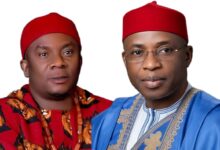
The recent article authored by one Ben Ahanonu, which ludicrously questioned Chief Dr. Ikedi Ohakim’s aspiration to return as Governor of Imo State raises important issues worthy of public discourse. However, for such a conversation to be meaningful, it must be guided by fairness, objectivity, and a balanced assessment of history.
No leader’s legacy should be measured solely by the criticisms of opponents while overlooking the achievements that earned him recognition both within and beyond the state. To do otherwise tantamount to been mischievous and intellectually dishonest.
Chief Ikedi Ohakim’s interest in serving Imo State again is neither an act of desperation nor an obsession with power. Rather, it reflects a commitment to a vision that many believe was interrupted before reaching full maturity. Democracy guarantees every qualified citizen the right to seek public office while reserving the final decision for the electorate.
Those who argue that four years is sufficient for every meaningful vision to be accomplished ignore the realities of governance. While a focused administration can achieve significant milestones within a single term, some transformative policies require continuity, stability, and time to yield their full benefits. History is replete with examples of leaders whose most enduring achievements emerged from sustained implementation over successive years.
Chief Ohakim’s administration was built on the pillars of modernization, environmental sustainability, infrastructural renewal, and institutional reforms. His Clean and Green Initiative was far more than the planting of flowers. It transformed Owerri into one of Nigeria’s cleanest and most attractive state capitals, earning national acclaim and promoting a culture of environmental responsibility that many states sought to emulate.
Similarly, the Imo Rural Roads Maintenance Agency (IRROMA) was conceived as an innovative intervention to address rural accessibility and connect communities to economic opportunities. If subsequent administrations failed to sustain the programme, responsibility should not be placed entirely on the architect of the vision.
Beyond these initiatives, Ohakim’s government invested in road construction, security enhancement, rural development, youth empowerment, and private-sector-driven economic growth. His administration projected Imo State as an emerging destination for investment and tourism while promoting policies aimed at improving the state’s economic competitiveness.
Much has been said about the legendary achievements of the late Dee Sam Mbakwe, whose contributions to the development of old Imo State remain undeniable. Every Imolite holds his memory in high esteem. However, celebrating Mbakwe should not require diminishing other leaders who served the state with dedication. Different eras present different challenges, and each administration must be assessed within the context of its time.
One critical issue often overlooked in these discussions is the principle of equity. Since the return of democratic governance, the governorship of Imo State has largely revolved around the principles of inclusion and fair representation among the three geopolitical zones. Many stakeholders believe that the tenure of Okigwe Zone was interrupted and remains incomplete. Consequently, Chief Ikedi Ohakim’s aspiration is viewed by many not merely as a personal ambition but as a legitimate quest to complete the unfinished mandate of Okigwe Zone within the spirit of justice, fairness, and political balance.
Those who insist that leadership must always be handed over to younger faces miss an important truth: governance is not a contest of age but of capacity. Experience remains one of the most valuable assets in public administration. Across the world, societies facing complex challenges often turn to tested leaders with proven records, institutional knowledge, and the wisdom acquired through years of service.
Chief Ikedi Ohakim remains one of the most experienced, intellectually grounded, and administratively equipped political leaders in Imo State today. His understanding of governance, economic planning, public policy, and statecraft has never been in doubt, even among many who disagree with him politically.
The debate before Ndi Imo should,therefore, not be whether Ohakim served before. Rather, it should be whether he possesses the competence, vision, experience, and character required to advance the development of Imo State in the years ahead.
For many citizens, the answer remains a resounding yes.
As Imo State prepares for another political transition, the focus should remain on ideas, capacity, fairness, and the future. Political discourse must rise above personal attacks and give voters the opportunity to evaluate candidates based on their records, their plans, and their ability to deliver results.
Chief Ikedi Ohakim has paid his dues in public service. He has the experience. He represents the quest for equity. He possesses the competence required for leadership. Most importantly, he remains committed to the progress of Imo State.
That is why many believe he remains the best choice to complete the unfinished mandate of Okigwe Zone and lead Imo State into a new era of growth, stability, and prosperity.
God bless Imo State.
God bless Ndi Imo.
Comr. Kelechi Iwuchukwu
A Political Analyst
✍️ Writes from Owerri.