Tinubu’s Security Emergency: Why Appointing Gen. Musa Is The Turning Point — And Why Sir Mike Okiro Must Join Him

By Capt Bishop C. Johnson US Army (rtd)

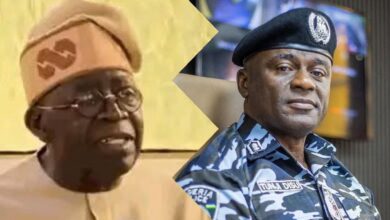
When President Bola Ahmed Tinubu GCFR declared a State of Emergency on National Security, the announcement stirred both hope and skepticism across the country. After nearly two decades of terrorism, banditry, kidnapping, rural attacks, and insurgent violence, Nigerians have every right to demand more than speeches and committees. They want action, structure, and competence.
To the administration’s credit, the President followed the declaration with a number of operational steps: redeploying police officers from VIP protection back to schools to revive the Safe School Initiative, expanding recruitment into both the Police and the Armed Forces by 50,000 personnel, renovating and revitalizing police training institutions nationwide, and deploying newly established Forest Guards through the NSA and DSS to reclaim Nigeria’s vast ungoverned forest spaces. These are important measures. But no single step is more decisive, symbolic, and operationally significant than the appointment of Gen. Christopher Musa, Nigeria’s immediate past Chief of Defence Staff, as the new Minister of Defense.
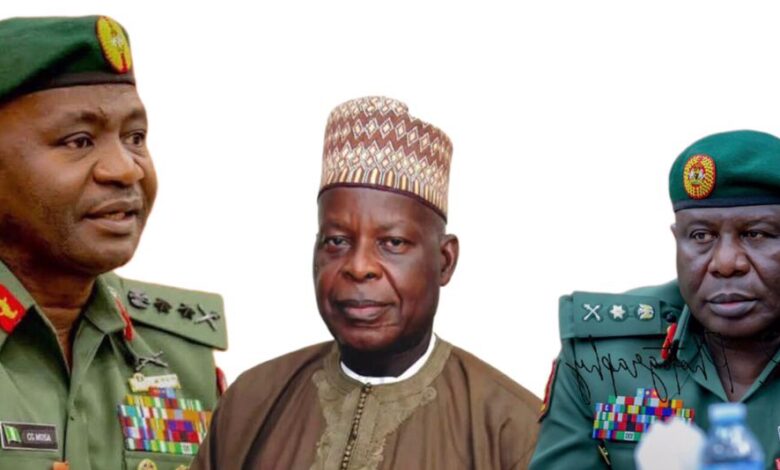
Gen. Musa stands out as arguably the most pragmatic, focused, and hardworking CDS Nigeria has seen in recent years. As CDS he demonstrated professionalism, operational presence, strategic discipline, and results rather than rhetoric. Appointing him as Minister of Defense corrects one of the administration’s early missteps: placing two ministers with neither security nor military experience in charge of the nation’s most sensitive portfolio. The consequences were predictable — drift, confusion, and lack of strategic direction. With Gen. Musa, President Tinubu has restored institutional memory, operational stability, and experience-driven decision-making. The message is clear: this time, the emergency is real.
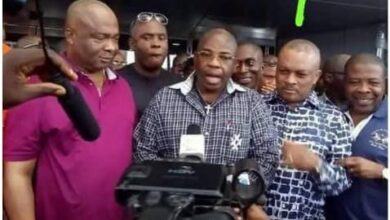
However, if the Ministry of Defense is to function as a true national command hub, the President must complete the reform by replacing the current Minister of State for Defense with an individual of proven security expertise — not another political seat warmer. A strong candidate stands out above all others: Sir Mike Mbama Okiro, former Inspector General of Police and former Chairman of the Police Service Commission. His track record is unmatched in contemporary Nigeria and his contributions to national security and economic stability are both historic and far-reaching.
At a time when OPC violence threatened to cripple Lagos, businesses fled, and expatriates evacuated, then-Governor Tinubu requested the posting of Commissioner Mike Okiro, and President Obasanjo approved. Okiro crushed the OPC violence, restored order, and made Lagos safe again — allowing investment and growth to return. The Lagos success story began with a Tinubu–Okiro combination. As Inspector General of Police, he secured a salary increase for officers within his first six months, significantly boosting morale nationwide. He also forced a digital shift by insisting that police officers become ICT-literate, modernizing the force in a way no previous administration had attempted.
Okiro’s proposed police housing scheme was a visionary structural reform that would have drastically reduced corruption while turning officers into homeowners with mortgages tied to professionalism. Had the scheme been implemented, thousands of police personnel would today be property owners with increased loyalty and stability. He also conceived the Niger Delta Amnesty model that ended militancy, which saw Nigeria’s crude oil production rise from 600,000 barrels per day to 2.1 million barrels per day within months. This singular effort added billions of dollars to Nigeria’s foreign revenue and helped stabilize the national economy. Any man who risked his life to negotiate with militants and secure peace deserves national recognition.
Long before Boko Haram metastasized into a hydra-headed monster, Okiro foresaw the threat and created the Anti-Terror Squad (ATS), now known as the Counter Terrorism Unit. Had it been adequately funded and empowered after his retirement, Nigeria might have contained insurgency before it exploded. Beyond these, he introduced several modernizing interventions, including assault files for police accountability, revival of Police Games and Marathons, SIM card registration processes, mandatory armored vehicles for cash-in-transit, and security access control systems for banks. These policies have shaped modern Nigerian policing and national security standards. It is difficult to name any contemporary Nigerian who has contributed more in terms of patriotic impact, security innovation, and economic stabilization.
Nigeria stands at a defining moment. Security is too important, too fragile, and too consequential to be treated as a political experiment. What the country needs now are operational thinkers, experienced field commanders, inter-agency strategists, and security technocrats. The Ministry of Defense must never again be treated as political compensation. It is the nerve center of national survival. The combination of Gen. Musa as Minister of Defense and Sir Mike Okiro as Minister of State would create seamless synergy between military and police operations, improve the response to oil theft and Unknown Gunmen activities in the South-East and South-South, strengthen intelligence coordination, professionalize the security architecture, and restore public confidence in the government’s capacity to protect lives, property, and national assets.
President Tinubu’s emergency declaration has begun with strong steps, but its success depends on the quality of leadership placed in charge of security. By appointing Gen. Christopher Musa, the President signaled seriousness. To consolidate this, he must elevate proven technocrats like Sir Mike Okiro whose record of patriotism and strategic insight is undeniable. Nigeria cannot afford political experiments in its most sensitive ministry. Security is too important to be left to politicians. This is the moment to institutionalize competence, restore professionalism, and begin the journey to a safe and stable nation.
Capt. Bishop C. Johnson, US Army (rtd), is a national defense and military strategist and a political commentator.