A Response to the Misinformation by Willie Amadi and the Imo Harmony Project
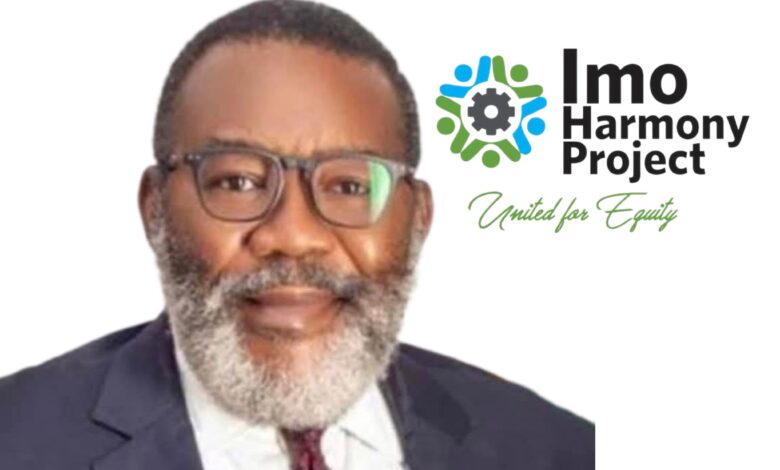
The recent release by Mr. Willie Amadi, purporting to outline the “vision and mission” of the so-called Imo Harmony Project (IHP), must be firmly addressed—not with sentiment, but with facts and historical clarity. At a time when Imo State stands on the precipice of a generational opportunity to correct longstanding political injustices, no group or movement should be allowed to rewrite history or distort the moral foundations of equity upon which our future must be built.
Let the truth be told, even if it stings: Owerri Zone has no moral standing to invoke a Charter of Equity which it brazenly sabotaged in 2011. The Imo Harmony Project’s campaign, dressed in appealing language and wrapped in media charm, is an insult to collective memory, logic, and the very principle of justice it claims to defend.
From 1999, Imo State witnessed the beginning of a naturally evolving Charter of Equity—an informal but morally binding rotation of power among the three senatorial zones: Orlu (Imo West), Okigwe (Imo North), and Owerri (Imo East). It began with Chief Achike Udenwa of Orlu Zone, who served a full eight years (1999–2007). In 2007, the baton moved to Dr. Ikedi Ohakim from Okigwe Zone—a transition broadly accepted by the Imo political family and the people.
Dr. Ohakim was not just elected; he represented a bridge to fairness, tasked with completing Okigwe’s expected eight-year turn by 2015. Only thereafter would the moral order naturally move the governorship to Owerri Zone.
But in 2011, this moral order was sabotaged—not by Orlu or Okigwe, but by Owerri Zone politicians, many of whom are today the architects or cheerleaders of the IHP. In a vicious campaign marred by propaganda, falsehoods, and federal interference, these actors colluded to oust Ohakim prematurely. Rather than wait for 2015 as justice demanded, they disrupted the sequence in 2011—betraying the principle of equity in pursuit of blind ambition.
Ironically, their desperate gamble failed, and the unintended consequence was catastrophic: the governorship returned not to Owerri Zone, but to Orlu Zone via Rochas Okorocha, extending Orlu’s dominance for another eight years (2011–2019), and then again with Senator Hope Uzodimma (2020–2028). Owerri Zone’s impatience in 2011 plunged the state into 16 unbroken years of Orlu hegemony—a tragedy entirely of their own making.
Let us also remind Mr. Amadi and IHP that during the last gubernatorial election in 2023, Owerri Zone recorded one of the lowest voter turnouts in Imo State. A zone that is now claiming entitlement to the governorship could barely mobilize its people to participate in a critical election. How then does IHP intend to unite the state for any power shift when it cannot even unify its own zone at the ballot box?
Numbers don’t lie. The apathy displayed by Owerri Zone in 2023 is a glaring indictment—a signal that the zone is yet to learn from its political misadventures and is disconnected from the pulse of the people.
It is equally dishonest to cite Governor Hope Uzodimma as the foundation of IHP’s campaign. The Governor may have spoken about “equity” in abstract terms, but he has been categorical in recent times that competence, not zoning, will determine his support in 2028. On multiple platforms, Governor Uzodimma has stated that the next governor must have the experience, capability, and vision to consolidate the gains of his administration—not merely come from a favored zone.
It is therefore disingenuous and politically opportunistic for IHP to anchor its mission on a selective interpretation of the Governor’s words, while ignoring his clear preference for merit and proven competence as the deciding factor for 2028.
Despite IHP’s claim of neutrality and non-partisanship, its intent is thinly veiled: to once again manipulate the emotional sentiment of “it’s our turn” without addressing the unfinished business of justice and restitution. The real Charter of Equity was truncated in 2011. It must first be restored before any moral claims can be made.
Until Owerri Zone publicly acknowledges its role in that sabotage, and supports the completion of Okigwe Zone’s rightful turn, its current campaign amounts to rewarding betrayal and institutionalizing injustice. There is no shortcut to equity. There is no peace without truth.
Imo people are not asking for handouts or manufactured harmony. They are demanding credible leadership, tested competence, and historical accountability. Dr. Ikedi Ohakim—whose mandate was stolen in 2011—remains the symbol of that broken bridge. If the state must return to the path of equity, Okigwe Zone must complete its original 8-year turn. Only then can Owerri Zone approach the table of justice with clean hands.
Your message may sound appealing. Your campaign may appear peaceful. But the foundation is fraudulent and the mission morally hollow. True harmony is not built on revisionism, nor is equity served through propaganda.
If you truly want harmony in Imo State, demand justice first. Begin by acknowledging the betrayal of 2011. Support the restoration of Okigwe’s stolen mandate. Only then will your message hold water, your movement gain credibility, and your mission align with truth.
Until then, let us call things by their real names.
What IHP represents is not harmony. It is historical deceit.
Signed,
Dubem Okafor PhD (Oxford),
A Concerned Imo Stakeholder in Pursuit of Justice, Equity, and Historical Redemption